How's your LinkedIn profile? When is the last time you visited it or updated it?
The platform went through some changes over the past or so and with 2018 coming to a close, it's a great time to update your LinkedIn profile for the upcoming new year and optimize it for search.
After all, as a leading B2B social network, LinkedIn is where your potential clients, users, buyers, customers, and referral sources will find you. So just like a website, optimizing your profile content is important.
1 - Update your headline (and feel free to do so periodically). This is the bold descriptive line below your name that broadcasts what you do. When I write LinkedIn profile summaries, I like to include a "what's in it for them" element, a value proposition element so people can see right away why they should contact you. You have up to 120 characters (including spaces) to do this so be judicious, but include a relevant search term here.
2 - Your summary is where you can tell your story. Gone are the days of stiff third-person descriptions (unless that's your style). Draw the visitor in, tell them why you love what you do, share a significant win, talk about specialty areas. Bring out your unique selling proposition (USP); why should someone contact you over your competition? This section gives you up to 2000 characters with spaces so it's fairly generous in terms of room to sell yourself. Be sure to include search terms related to your area of expertise, your industry, and the clientele you serve.
3 - Other areas are available for your job experience (current and prior), education, certifications and professional designations, areas of interest, accomplishments, and other resume elements that don't need to be in your summary.
4 - Ask for recommendations from quality sources: colleagues, vendors, partners, clients. These should be authentic testimonials and are an excellent way to enhance your LinkedIn profile.
5 - Endorsements - these are nice if people are truly endorsing you for skills they know you possess and at which you excel. That might not always be the case; that's why I prefer recommendations.
6 - Add files tho showcase your deliverables - presentations and white papers are excellent additions.
7- Publish on LinkedIn. Remember LinkedIn Pulse? That's gone but you have the ability to publish articles; it's a great way to give your blog additional breadth (consider doing a slight edit so it's not duplicate content) or to amplify your weekly posts by mixing in longer-form content.
Now that your profile is stellar, be sure to post with some consistency; a couple of times a week is ample. The posts can be fairly long, 1300 characters, but that figure is reduced if you are adding an image or a link.
What to post? Glad you asked! You can share third-party news and articles by others with your commentary (which shows your insights and expertise in the field) as well as your own original content that drives traffic to your website or a specific landing page. There's plenty of information out there to share and comment on to mix in with your content about your field. But that's a post for another day.
Need help with your LinkedIn and other social media profiles or posts? A professional copywriter can help. You know what to do: caryn@starrgates.com or 201-791-4694.
Showing posts with label social networks. Show all posts
Friday, October 26, 2018
Wednesday, July 4, 2018
The Age of Incivility: the Loss of Civil Communication on Social Media
The hashtag #civility has been popping up on Facebook and I'm sure, on other social media platforms, and for good reason. The divisive political climate (and equally divisive rhetoric), coupled with the incessant social media chatter around us, has given rise to increasingly gross, distasteful, and hateful attacks across the digital space.
Why all the hate? Can't we all just agree to disagree?
Social media provides a veil behind which people can hide. It enables users to go after people they don't even know, whose views run counter to their own. But it's often not a matter of, "I respectfully disagree." It is very often vehemently hostile, crude language flung at complete strangers, often about topics that might not even direct affect the flinger's life. Even in matters that many of us care about deeply, and may or may not impact our daily lives, why is there no civility in the responses? Why all the knee-jerk ugly reactions that are cluttering up our feeds?
Humans are attached to the need to be right, often at great cost. As is often seen on social networks, that cost is one's personal dignity and social civility.
There is ample digital real estate for civil discourse, a sharing and an exchange of views in a respectful manner. There are people with whom I am connected, and some with whom I work, that do not share my politics, religion, ethnic or cultural background, or views on societal matters but we find the common ground upon which we can converse with civility. We respect each other as fellow citizens and colleagues. As a former boss used to tell me, "Be tough on the issues but easy on the people." Would that more of us would heed that advice.
We see the hostile comments everywhere. Twitter threads devolve into acidic stews of vitriol. Facebook comments turn ugly in a tap of a key. Internet trolls throw major shade, convolute stories, bully total strangers. I've even seen it occasionally on LinkedIn of all places (speaking of, please keep your posts related to business there). Sniping and cursing at people unknown to the user, a friend of a friend perhaps, is commonplace. It's also offensive and unnecessary. Remember what the teacher said: If you don't have anything nice to say, don't say anything. Or take it offline and keep it away from the rest of us who just want to enjoy each other's company.
The real news/fake news battle is not helping matters. Before you post that incendiary story or react to the WTF-worthy headline (and perpetuate the hate, intentionally or unintentionally), read the actual article. Find out the source; is it an actual news organization? Check snopes.com or truthorfiction.com if you must, if the story seems too crazy to believe. Likewise, don't believe every meme you see; remember that someone created it and the quote might not be true, the story not factual, the attribution incorrect or out of context. We can all help cut down on the vitriol if we take a few minutes to check something out before spreading rumors and ill will. (Image: Nick Youngson Photography)
By the way, one positive feature about scrolling through your feed to see what your connections are talking about is that you can keep on scrolling. Don't stop. Don't react. Just keep on going if you don't like the conversation. Or, take a deep breath and type a considered, considerate response. It's easy to do if you are not attached to proving a point but to sharing a viewpoint instead.
I encourage you to take many deep breaths as you scroll through your feeds, consider writing responses rather than reactions, respect each other's right to opinions and world views, pass over the posts you don't like, and help bring back #civility to the social media discourse. It was once there and this is entirely possible.
Why all the hate? Can't we all just agree to disagree?
Social media provides a veil behind which people can hide. It enables users to go after people they don't even know, whose views run counter to their own. But it's often not a matter of, "I respectfully disagree." It is very often vehemently hostile, crude language flung at complete strangers, often about topics that might not even direct affect the flinger's life. Even in matters that many of us care about deeply, and may or may not impact our daily lives, why is there no civility in the responses? Why all the knee-jerk ugly reactions that are cluttering up our feeds?
Humans are attached to the need to be right, often at great cost. As is often seen on social networks, that cost is one's personal dignity and social civility.
There is ample digital real estate for civil discourse, a sharing and an exchange of views in a respectful manner. There are people with whom I am connected, and some with whom I work, that do not share my politics, religion, ethnic or cultural background, or views on societal matters but we find the common ground upon which we can converse with civility. We respect each other as fellow citizens and colleagues. As a former boss used to tell me, "Be tough on the issues but easy on the people." Would that more of us would heed that advice.
We see the hostile comments everywhere. Twitter threads devolve into acidic stews of vitriol. Facebook comments turn ugly in a tap of a key. Internet trolls throw major shade, convolute stories, bully total strangers. I've even seen it occasionally on LinkedIn of all places (speaking of, please keep your posts related to business there). Sniping and cursing at people unknown to the user, a friend of a friend perhaps, is commonplace. It's also offensive and unnecessary. Remember what the teacher said: If you don't have anything nice to say, don't say anything. Or take it offline and keep it away from the rest of us who just want to enjoy each other's company.
The real news/fake news battle is not helping matters. Before you post that incendiary story or react to the WTF-worthy headline (and perpetuate the hate, intentionally or unintentionally), read the actual article. Find out the source; is it an actual news organization? Check snopes.com or truthorfiction.com if you must, if the story seems too crazy to believe. Likewise, don't believe every meme you see; remember that someone created it and the quote might not be true, the story not factual, the attribution incorrect or out of context. We can all help cut down on the vitriol if we take a few minutes to check something out before spreading rumors and ill will. (Image: Nick Youngson Photography)
By the way, one positive feature about scrolling through your feed to see what your connections are talking about is that you can keep on scrolling. Don't stop. Don't react. Just keep on going if you don't like the conversation. Or, take a deep breath and type a considered, considerate response. It's easy to do if you are not attached to proving a point but to sharing a viewpoint instead.
I encourage you to take many deep breaths as you scroll through your feeds, consider writing responses rather than reactions, respect each other's right to opinions and world views, pass over the posts you don't like, and help bring back #civility to the social media discourse. It was once there and this is entirely possible.
Tuesday, August 18, 2015
What's Up with all the Garbage Piling up on LinkedIn Pulse?
So everyone wants to publish. And LinkedIn lets us do that. That's the good news. The bad news? Lots of "articles" that are simply promotional posts that add nothing to anyone's day except for (maybe) the person who posted it.
One of the problems is that since LinkedIn Pulse is seemingly open to everyone, the volume and quality are not being controlled, and some stinky stuff is showing up in our notifications. Am I right?Not everyone is a writer, and not everyone has something of business value to share there that often ... and that's OK! Make it a status update if necessary, or post it on your website or your blog to promote yourself (and even that might not be so cool -- blogs, as part of your social media and content marketing efforts, should also be informational, educational, helpful, insightful, etc.). LinkedIn is a B2B social network and the publishing opportunity should contribute something to your business connections, not stuff their feeds with garbage or filler. Helpful advice, industry insights, points of view about a trend or an issue in your field are great. Thinly or not-even veiled promotion is content trash.
A client of mine, an advertising agency CEO, noted this recently during a discussion on publishing opportunities for expert byline articles; we talked about how the potential for LinkedIn to be a valuable platform for expert content has diminished due to the low quality and sheer volume of the published posts. LinkedIn got the lowest marks in a survey cited in a recent Market Watch article and when I shared the link, I commented about how disappointed I have become in my once-favorite social network because of the quality of posts.
My colleague, Gene Sower of Samson Media, an internet marketing and social media expert, agrees. After he read the article and my opinion about it, he said: "People are posting Pulse content that is one paragraph and a link to some promotional piece ... Or posting totally promotional content without ANY value to the reader .... Just because you CAN post anything in LinkedIn Pulse does NOT mean you should. Done properly, the writer should always have the reader in mind." We lamented about the declining quality of the posts (real estate listings, speaking engagement announcements, materials for sale); to illustrate the point, he shared a link to post about a broadcasting award someone won over 15 years ago. It would be great on that person's website. It's not an article.
I originally posted this on LinkedIn and I was very sure people were going to poop all over it as a rant that doesn't belong there
as a published item. So be it. I threatened to write this blog post as well
and maybe they'll poop on that, too. And I'll bet the LinkedIn people will be
mad at me for taking them to task for not moderating published content.
Oh well. I consider this a public service to my colleagues who are in
agreement with me about the filler that's been appearing in LinkedIn
posts.So dear readers, before you publish on LinkedIn, please consider if you are writing and sharing an expert opinion, an industry insight, an update about your field, something pertinent to your cohort and the like. If not, please make it a status update if you're feeling the urge to put it here. Or flush it down the toilet.
Rant over. Have to go take out the garbage.
Sunday, June 1, 2014
Why Monitoring Your Online Presence Matters
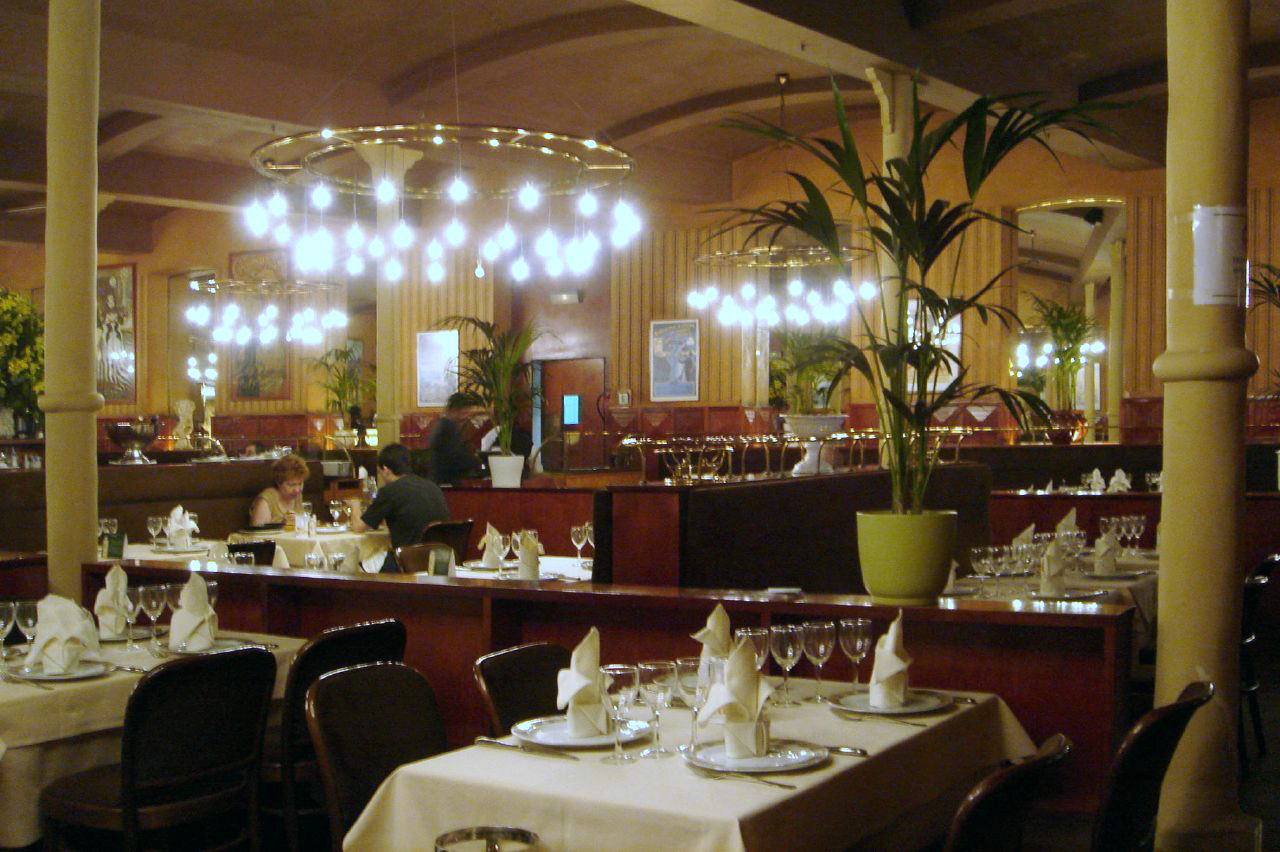
My region of the NJ Association of Women Business Owners had a dinner program booked at this restaurant for a Wednesday evening. The reservation was made a couple of months ago. A few days prior to the event, I called the owner's cell phone (she had given a couple of us that number) to give her a head count and to confirm. It went directly to voice mail, which was full and not accepting any messages.
Being a person of the modern age I decided to check the website for the restaurant's phone number. The website was gone, poof, down, not found, 86'd (to use a restaurant term). Curiouser and curiouser, as Alice in Wonderland would muse. I called information for the phone number and dialed; no answer. By then I was assuming something bad was going down.
I did a bit more online digging and came upon the restaurant's Yelp page. The header proclaimed that several Yelpers reported the location was closed. Suspicion confirmed.
It was further confirmed when I went to the restaurant's Facebook page and saw it had not been updated for over a year. What would you think?
Another NJAWBO member also tried calling the two phone numbers and also got no answer. I shared my digital detective work with her and we agreed it was unfortunate that the restaurant had closed, and that we were not told. We canceled the meeting. I decided the next day to call the restaurant again because it seemed so weird and guess what? An employee answered and said the owner would be back in about an hour. What?! Further confusion prevailed.
Imagine our surprise when the owner called my friend a little while later to get the details for our dinner! Huh?!
I eventually spoke with the owner and explained to her that after a full day (or more) of not getting any answers, of a voice mailbox that was not accepting messages, an absent website and a Yelp obituary (not to mention the abandoned Facebook page) that we thought the restaurant was closed. It is not. The owner explained that it had been closed for a couple of days for renovations but not permanently closed. She did have some lame excuse about not answering the phone because of the construction (I didn't get that connection).When I told her about the absent website she said something about it being updated. I explained to her that you don't take down a perfectly serviceable website just because you are updating your menu! Wait until you have the new site ready before you take down the existing one.
She had no clue about the Yelp post -- nor about the super-negative reviews that are posted there. So on top of the poor decision to take down the website prematurely, she was not monitoring what customers have been saying about her restaurant and there were definitely some comments that could have used some crisis communications responses.
When the issue of the Facebook page came up, she told me the prior owner's daughter had put up the page and would not make her an admin on the page, so it was in a state of suspended animation. She can't even take it down. I don't know why someone would abandon a page and then not give the new owner the permissions necessary to manage it (although I doubt there would have been much in the way of management there). But this was another nail in the reputation coffin.
She did assure me they are working on new menu items, they are open for business, and encouraged me to come by soon to check out the new dishes. I felt like telling her she needs me to check out her online reputation and help her clean that up!
What went wrong:
- The public had misinformation about the restaurant's status due to errors of omission (no signage or outgoing voice mail message stating the reason for the temporary closure). Some simple old-school communication tactics would have served the place well. A sign in the window and an outgoing telephone message explaining "we're closed for several days for renovations" would have saved them our business and would have avoided totally incorrect information on Yelp. That Yelp obit is now gone.
- The website person took down the existing website for no good reason, feeding speculation about the restaurant's closure when coupled with the "no one's home to answer the phone" situation. As noted above, don't take down the old website before launching the new one. If you do, put up a simple "new site under construction" page for the time being so people don't make wrong assumptions. By the way, there is now a non-functioning Wordpress site up in its place with some pretty pictures, no information or copy, and lots of contact boxes.
- The owner had no idea there was any conversation on social media about the restaurant and therefore was not responding to negative comments/reviews or correcting the misinformation out there about its demise. If you own a business, check the search engines for your name and see what's going on out in the cyber wilderness before reputation disaster strikes.
- No one had been attending to the Facebook page for so long, it gave the appearance of being abandoned (the page and the location). Either keep the pages updated or take them down; otherwise it gives the impression that no one's home. Their page is still abandoned. By the way -- please make sure you engage with your audience on your social pages. If people are allowed to comment there and they post something that warrants your attention, talk to them. Social dialogue is a great way to build audience and enhance your digital cred.
Friday, November 16, 2012
New (or Not-So-New) Media as the New Newsroom
Hurricane Sandy turned the social networks into virtual, 24-hour, non-stop newsrooms for many people. Whether or not you had power, whether you checked your pages on a desktop or mobile devices, it seemed everyone everywhere in affected areas (and beyond) were communicating, updating, and commiserating on the social networks.
I will freely admit that although my home was unaffected by the weather, I became utterly obsessed with checking in with followers, friends, and fans on Facebook, which became the visual ground zero for me for all things Sandy. I shared and soaked up countless compelling, frightening, and sad images posted by everyday people, news organizations, and bloggers. I posted updates, news, announcements on my wall for people to see. I got hooked on a newfound page, Tri-State Weather, where a lot of my weather-related posts came from. From the devastation on the Jersey Shore to the decimation on Staten Island, Queens, and other areas of New York, I and so many others came together in a newly formed online community that rallied 'round the storm victims (human and animal) to create a new kind of news organization.
Many people took to tweeting constant updates using various storm-related hash tags and I did follow the headlines there, and shared some updates throughout that first week. But for me, the double-whammy of existing relationships and all those photos and videos on Facebook truly became the newsroom of the moment. One friend created a new group page devoted solely to post-hurricane news: a place where people can share volunteer meetups, donation drives, tips on how to get to badly hit neighborhoods to deliver goods, who needs what and where and when. I was thoroughly gripped by this, actually unable to focus on my work that week as I was driven to be part of the breaking news.
I believe that this large-scale disaster has ramped up social media's place in news reporting . . . not journalism per se, as I am not stating that good, authentic, in-depth news reportage has been replaced. But it certainly was pushed aside a bit to make room for all the ordinary and extraordinary people who were reporting from the field in a way not seen before. We have all grown accustomed to local newscasts running video that was sent in by viewers, and I've noticed Twitter handles and hash tags in bugs on the screen during news programs more and more.
Ted Turner's visionary idea decades ago for a real-time, worldwide, 24-hour news station has given birth to a whole different way to do breaking news on social networks. I would never have thought, as a young copywriter working on the launch of CNN in the early 1980s, that I would be part of the news cycle in some small way during a natural disaster years later. The experience was absorbing on a level I could not have foreseen and I was gratified to hear that people who were following me were getting useful information. Now that the initial wave of Sandy has passed and the long, hard work of reconstruction begins, I hope I don't ever have the "opportunity" to feel compelled again to become a citizen journalist in times of struggle and darkness. I'd much rather stick to informational posts, newsy tidbits about advertising, marketing, or public relations, and promotions for my clients on my Facebook business page, my LinkedIn profile, or on Twitter or Google+.
Tuesday, August 28, 2012
When Good People (?) Say Bad Things Online
I have witnessed some serious downward spirals in interpersonal communication on social networks and it's quite disturbing.
And many of these are from so-called communications professionals, copywriters, and marketing experts.
I'm not talking about the lewd, crude comments the general public posts to YouTube videos and other shared media. Those are for another conversation. I'm talking about the way professionals snipe at each other on LinkedIn or bash each other on Facebook fan pages. Perhaps because there is room for more characters on these networks, people feel the need to show the darker side of their own character.
In short, their shit comes out all over the place and it's really ugly.
Do they really want to be known or remembered in this way? Uh, I guess so, because they can't seem to stop. As someone who writes for a living, and helps businesses and entrepreneurs spit-shine their image and their marketing message to the best of my abilities, this trend horrifies me!
I have seen this ugly devolution several times on LinkedIn when someone has posted that he/she is looking for a copywriter or art director. People respond with their contact information because they're looking for work. OK. But God forbid the seeker of professionals does not post an update publicly right away, or respond to each and every respondent--people immediately go on the attack and start saying some very ugly things about other professionals they don't even know! Then they start feeding on each other's posts until the conversation gets downright wicked. And they wonder why they are still looking for work?
How about when someone posts a question or opinion to a group and members actually mock them "in public" through their responses? Really? Did you not get the memo that social networks are for sharing ideas, resources, and opinions that will make a positive difference for others? Can't you take your nasty, petty, childish screeds offline and spare the rest of us innocent bystanders who must now delete these so-called discussions?
What you write on social media is forever, you can't really take it away, and your online reputation is how many of your friends, fans, group members, and followers will remember you.
A Sad Example
Last spring a marketing manager posted a simple call for freelance copywriters in one of my LinkedIn groups. People responded. A lot. I chose to respond to her post privately as I often do. It's an easy option and keeps you out of the comments fray.
Some group members checked out this person's profile (which is not related directly to her current position). These group members made an assumption about her present job and her needs, and those whose work history aligned with that background gave some more targeted responses. OK, so far, so good and on point. Until they encountered the response vacuum and did not hear back from this person about their sterling credentials.
Other group members started to get antsy when a couple of weeks went by and there was no further communication from the marketing person who needed to hire a freelance copywriter. The mob started to gather its verbal pitchforks and rakes and really went to town, bashing this person publicly--on LinkedIn, among each other--for not responding to them in what they deemed to be a fair amount of time. Yes, these copywriters publicly demeaned her and anyone who would dare to post a possible job opening. Accusations of phishing abounded!
I sat on the sidelines in horror as I watched fellow group members devolve into a mob mentality of permanent, negative, self-defeating written communication. I also followed up privately and politely to the woman to see if she'd made any decisions yet. I also gave her a heads up on the ugly slander-fest going on in the LinkedIn group at her expense.
She posted a polite update to everyone assuring them she received everyone's contact information and was holding on to it for any future needs.
Oh - and I got the assignment.
And many of these are from so-called communications professionals, copywriters, and marketing experts.
I'm not talking about the lewd, crude comments the general public posts to YouTube videos and other shared media. Those are for another conversation. I'm talking about the way professionals snipe at each other on LinkedIn or bash each other on Facebook fan pages. Perhaps because there is room for more characters on these networks, people feel the need to show the darker side of their own character.
In short, their shit comes out all over the place and it's really ugly.
Do they really want to be known or remembered in this way? Uh, I guess so, because they can't seem to stop. As someone who writes for a living, and helps businesses and entrepreneurs spit-shine their image and their marketing message to the best of my abilities, this trend horrifies me!
I have seen this ugly devolution several times on LinkedIn when someone has posted that he/she is looking for a copywriter or art director. People respond with their contact information because they're looking for work. OK. But God forbid the seeker of professionals does not post an update publicly right away, or respond to each and every respondent--people immediately go on the attack and start saying some very ugly things about other professionals they don't even know! Then they start feeding on each other's posts until the conversation gets downright wicked. And they wonder why they are still looking for work?
How about when someone posts a question or opinion to a group and members actually mock them "in public" through their responses? Really? Did you not get the memo that social networks are for sharing ideas, resources, and opinions that will make a positive difference for others? Can't you take your nasty, petty, childish screeds offline and spare the rest of us innocent bystanders who must now delete these so-called discussions?
What you write on social media is forever, you can't really take it away, and your online reputation is how many of your friends, fans, group members, and followers will remember you.
A Sad Example
Last spring a marketing manager posted a simple call for freelance copywriters in one of my LinkedIn groups. People responded. A lot. I chose to respond to her post privately as I often do. It's an easy option and keeps you out of the comments fray.
Some group members checked out this person's profile (which is not related directly to her current position). These group members made an assumption about her present job and her needs, and those whose work history aligned with that background gave some more targeted responses. OK, so far, so good and on point. Until they encountered the response vacuum and did not hear back from this person about their sterling credentials.
Other group members started to get antsy when a couple of weeks went by and there was no further communication from the marketing person who needed to hire a freelance copywriter. The mob started to gather its verbal pitchforks and rakes and really went to town, bashing this person publicly--on LinkedIn, among each other--for not responding to them in what they deemed to be a fair amount of time. Yes, these copywriters publicly demeaned her and anyone who would dare to post a possible job opening. Accusations of phishing abounded!
I sat on the sidelines in horror as I watched fellow group members devolve into a mob mentality of permanent, negative, self-defeating written communication. I also followed up privately and politely to the woman to see if she'd made any decisions yet. I also gave her a heads up on the ugly slander-fest going on in the LinkedIn group at her expense.
She posted a polite update to everyone assuring them she received everyone's contact information and was holding on to it for any future needs.
Oh - and I got the assignment.
Subscribe to:
Posts (Atom)


