Showing posts with label journalism. Show all posts

Friday, February 17, 2017

What to Do When that Reporter Calls

Communication is written, spoken and in many cases, unspoken (body language). There are ample opportunities to communicate well or poorly, to cast yourself and your business in a positive light or leave the other person wondering "what the hell?"

The one person you don't want scratching a head and wondering what's just happened is a member of the press.

Although I am far from an expert on crisis communications, I do know a thing or two about communicating with members of the press and how to handle a call from a reporter. That call may be in search of your perspective or information about your company (or client, if you are in PR) as it relates to a particular issue in your field or in your community. Or, it could be in response to a negative matter your business was embroiled in for one reason or another. Either way, keep your head on straight, keep your cool, and like the stalwart Joe Friday of "Dragnet" fame, deliver just the facts.

Appoint the right spokesperson
This should (must) be someone who is very articulate, fluid with public speaking, and who thinks on his or her feet. It's important that this person have a nimble mind and stay a step ahead of anticipated conversation or be able to respond quickly (and well) to a question or comment. If the CEO, COO or president is not a great speaker or not necessarily the person the journalist is trying to reach, your marketing manager, community liaison coordinator, or public relations officer is the one to take the call. It needs to be someone who can ...

Stay calm
That's not to say you should be robotic, but communicating with a journalist is not the time to get emotional. This person is writing a story and is requesting your input, not your hysteria or gloominess. Journalists are seeking facts for their stories and dispassionate discourse is a great way to get your point across. You can be friendly and conversational but stay on guard as well. This speaks to the importance of ...

Know your talking points

Be like a Scout and be very prepared in advance with your talking points. Write them down, rehearse them if you need to. Whether you are discussing the positives about your company or organization or the organization's viewpoint about a particular issue, be very clear, concise, and on message. Know your mission statement, think about the "About Us" page on your website and what it says about your company or agency, and know the stance on the issue at hand. If your organization was involved in some way and it was a positive participation, be proud of it and state why. If there was a misstep of any kind, acknowledge it, apologize, and move on with positive points because ...

This is your chance to get free press
And you don't want to blow it! This is an opportunity to show your organization in a good light with the public, stakeholders, or employees. Even one positive quote in a long story is a good thing ... and many times better than one negative quote anywhere! This is also an opportunity to start developing a relationship with the reporter or writer, who might tap you in the future for comments about a news story, which can position you as an expert in your field (more good press). Being truly helpful to the journalist--by staying calm, delivering your talking points well (in a manner that moves the story along a positive path), and engaging the caller in a way that shows you are a partner and not an adversary, you'll drive good media relations for your brand.


Image result for telephone

Wednesday, October 15, 2014

Writing a Press Release? AP Style Matters

Writing a professional news release that the media outlets will take seriously is serious business, but it's not difficult. I've written before about making sure your news is actual news, that it is something the press and/or the listeners/viewers/readers will want to know about, as well as reasons to write a press release. 

Here are a few tips on how to write a press release the way a public relations writer would do it, with adherence to AP Style (the Associated Press Stylebook is readily available and is an excellent resource/guide for all matters of news-related reporting).


NOTE: These days, being the era of the digital and SEO press release, you should make sure to include keywords in your headline and in your supportive subhead that are also included in the body of your release.
That being said, here are some handy helpers and this list is by no means complete.

1. Give the editor what she needs to know in the Five Ws: who, what, where, when and why. Pack this information in the top part of your press release in case the very busy editor or reporter who is reading it is skimming and needs to move on to the next 1000 in her inbox. 


2. Get to the point quickly--don't make anyone read a few paragraphs before they figure out what your news is. Your headline and supportive subhead should telegraph the main premise and key talking points and your Five Ws should follow as immediately as possible. 

3. Titles are not always capitalized! GRRR ... this one always makes me just this side of loony. Clients always think a job title is capitalized. I have no idea where this misconception comes from. In a press release, the person's title (unless it is honorific or formal) is only capitalized when it precedes the person's name (Principal Figgins, Executive Director Caryn Starr-Gates) and is lower case after the name (Figgins, principal of McKinley High School or Caryn Starr-Gates, executive director of a whole lotta nuthin'). 

Formal titles, such as Senator, President, Princess are capitalized and appear before the person's name. There is a lot to read up on in the AP Stylebook about this.  


 4. You only use a person's full name the first time it appears, after which you use only the last name (usually; a few exceptions exist). So when I write about Dr. Arnold Pepper (that's Dr. Pepper's first name, right?) I would write, "Dr. Arnold Pepper, the lead scientist on the soft drink project ..." and later on I would write, "Pepper reported that Starr-Gates said she felt there was something really yucky about that soda and that she always prefers seltzer."

5. Write out some numbers, use digits on others. All ordinal and cardinal numbers first through ninth and one through nine are written out; move to numerals at 10th and 10.

6. Don't use first person. It's not "I" and "we" unless those are used in quotes in the story. It's news, written in the third person. Using first person will immediately tell the recipient, "I'm an amateur." 


7. Months that have more than five letters in them should be abbreviated. See the AP Stylebook for how to abbreviate those pesky long ones.

8. Postal abbreviations for state names (and the way they are written) are not the correct state name abbreviations for news releases. Some are the same, as it turns out but not all. Writing a letter to grandma in Tennessee? Write TN on your envelope but if you are talking about news in that state, write Tenn.

9. Spell correctly and punctuate correctly. Proofread that release before you hit "send." Remember that in American English, commas and periods go INSIDE the quotation marks. 

Although it makes me sad, serial commas are not used (I love me some serial commas). This is not to say that your feature article or book that you are writing according to another manual of style (hello, Chicago!) should not be peppered with serial commas; just not in your AP-style news release.

10.  Most book /magazine titles are in quotations. Don't italicize these. And not everything is put in quotes (reference material for example). Look it up in the "AP Stylebook."

11. Give the document some space. Many people double space their press releases, a throwback to the days of old when releases were mailed or faxed and editors needed room to edit. I usually space my documents at 1.15 to make them easier to read.
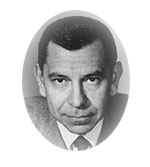
Joe Friday
12. Make sure your facts are straight. No sense making stuff up and then get caught in a lie or in spreading misinformation. You'll get blackballed in no time! If you know who this dude is and why I stuck his photo here, feel free to share that in the comments.

Here's a final tip: hire a professional writer to help you strategize, develop a newsworthy angle or bring out your real story, and write a professional, AP-style press release that won't be deleted before it's read! 

If you'd like me to review something you're working on, send it to caryn@starrgates.com.


  • Cover the five Ws: Who, What, When, Where, and Why. A press release functions as the hook to get an editor's attention. However, even if you have her attention, if you do not cover the necessary information, she will still find something else to print. The five Ws tell the editor the importance of the information presented.
  • 2
    Start with your main point. In journalistic writing, the main point, or overall topic, needs to be at the beginning. If the editor has to dig for it, he will find some other press release to print. You can also underline your main point by including a sample headline.
  • 3
    Look carefully at your use of dates and numbers. For example, ordinal numbers first through ninth have to be spelled out, while anything 10th and over uses numerals. the same applies for cardinal numbers one through nine, with 10 and higher written as numerals. Dates and years use numerals. All months with more than five letters, such as January, are expected to be abbreviated.
  • 4
    Go over your punctuation. It is important to remember to use one space after the period. Also commas and periods go inside of quotation marks, and serial commas are not used. That is, if you have a list of items, you do not need a comma before the last item: "This is a list of one, two and three items." Some writing styles do require a comma after the "and."
  • 5
    Check names and titles. The first time a person is introduced, you must use her first name and full title. Formal titles, such as President or Senator, must be capitalized and appear before the person's name. Informal titles such as deputy secretary of government agency are in lowercase and can appear either before or after a person's name. After first use, only the last name is necessary, except in cases where two people have the same last name or the name is mentioned in a direct quotation.
  • 6
    Double check and double space. When you finish writing your press release, double space the body of the release in order to give the editor space to edit the piece as necessary. Also, double check all your facts, including grammar and spelling, to ensure you are putting the best possible face on your company.


  • Read more : http://www.ehow.com/how_8029607_write-release-proper-ap-style.html

    Friday, November 16, 2012

    New (or Not-So-New) Media as the New Newsroom

    Hurricane Sandy turned the social networks into virtual, 24-hour, non-stop newsrooms for many people. Whether or not you had power, whether you checked your pages on a desktop or mobile devices, it seemed everyone everywhere in affected areas (and beyond) were communicating, updating, and commiserating on the social networks.

    I will freely admit that although my home was unaffected by the weather, I became utterly obsessed with checking in with followers, friends, and fans on Facebook, which became the visual ground zero for me for all things Sandy. I shared and soaked up countless compelling, frightening, and sad images posted by everyday people, news organizations, and bloggers. I posted updates, news, announcements on my wall for people to see. I got hooked on a newfound page, Tri-State Weather, where a lot of my weather-related posts came from. From the devastation on the Jersey Shore to the decimation on Staten Island, Queens, and other areas of New York, I and so many others came together in a newly formed online community that rallied 'round the storm victims (human and animal) to create a new kind of news organization.

    Many people took to tweeting constant updates using various storm-related hash tags and I did follow the headlines there, and shared some updates throughout that first week. But for me, the double-whammy of existing relationships and all those photos and videos on Facebook truly became the newsroom of the moment. One friend created a new group page devoted solely to post-hurricane news: a place where people can share volunteer meetups, donation drives, tips on how to get to badly hit neighborhoods to deliver goods, who needs what and where and when. I was thoroughly gripped by this, actually unable to focus on my work that week as I was driven to be part of the breaking news. 
    I believe that this large-scale disaster has ramped up social media's place in news reporting . . . not journalism per se, as I am not stating that good, authentic, in-depth news reportage has been replaced. But it certainly was pushed aside a bit to make room for all the ordinary and extraordinary people who were reporting from the field in a way not seen before. We have all grown accustomed to local newscasts running video that was sent in by viewers, and I've noticed Twitter handles and hash tags in bugs on the screen during news programs more and more.

    Ted Turner's visionary idea decades ago for a real-time, worldwide, 24-hour news station has given birth to a whole different way to do breaking news on social networks. I would never have thought, as a young copywriter working on the launch of CNN in the early 1980s, that I would be part of the news cycle in some small way during a natural disaster years later. The experience was absorbing on a level I could not have foreseen and I was gratified to hear that people who were following me were getting useful information. Now that the initial wave of Sandy has passed and the long, hard work of reconstruction begins, I hope I don't ever have the "opportunity" to feel compelled again to become a citizen journalist in times of struggle and darkness. I'd much rather stick to informational posts, newsy tidbits about advertising, marketing, or public relations, and promotions for my clients on my Facebook business page, my LinkedIn profile, or on Twitter or Google+.