To all you late adopters who somehow managed to get through decades in advertising and public relations without tackling social media, here's a comforting thought: you won't break it, so go ahead and try it.
Recently, I had a tutoring session with a colleague, a PR pro, who is not using social media in any way. Knowing that I manage various social media accounts for clients, she hired me to create pages on two platforms for one of her accounts, and post there on behalf of the client. After a few days, we decided the time was ripe for getting her acclimated to the world of Facebook and Twitter, where the client's pages now reside.
Word of caution to younger readers: Please remember that not all of us grew up as "digital natives" and even navigating a computer or making the most of certain software can be a challenge for some ... so don't judge.
However, if you categorize yourself as a techno dino who only uses what you need when you need it, have difficulty learning computer skills, or shudder at the thought of rising to the challenge of logging into multiple accounts and platforms and engaging there, relax. Remember, you can't break social media.
My friend and I sat down at her computer and began at the primordial ooze tank of understanding where to go online and then signing up for an account. Interestingly, we discovered there were phantom accounts in her name or under her email address already there (on both networks) from several years ago. We got around that, set up new accounts and got rolling.
First, I explained the difference between profiles and pages. Then on to the images; profile pictures ("yes, those always stay that small") and cover images ("they're like billboards") were explained and we uploaded a Facebook profile pic (nothing yet on Twitter).
Account names got done and the descriptions were easy, since she works in public relations and is a good communicator.
I could see that my colleague was overwhelmed by all the tabs, cards, text and images on the screen. All the while, I told her to take a deep breath and take it slow. Take the time to read what's on the screen -- the platform will tell you what it wants you to fill out if you just relax. I encouraged her to click, explore, check out other accounts ... because you can't break social media. Nothing will happen but you might learn something! Deep breaths! Go line by line ... it will get done and you'll have mastered another step. And don't forget, there's always the HELP tab.
We discussed posting in general, various types of content, and how to get other pages and people to engage. This led into a discussion about privacy settings. Lots of concern about who sees what. We set Facebook to very private, only friends can see posts. However, as we users know, it's all about getting more people to see, like and share those posts so if you have a professional page, don't be shy! But also don't be lax. Be sure to monitor the activity and address any negative activity happening on your feed. Remember, you're the boss (to a certain extent, at least).
Of course, it's also a good practice to retweet other users' posts when it's relevant, quoting the original tweet as well for additional commentary or context related to your field. On Facebook, helpful to share other people's content and tag, tag, tag (but not be annoying).
Ratings and reviews -- tricky -- depends on how open you want to be and perhaps what industry your business is in. The client's business is in a highly regulated field so for her client's page, we did not allow ratings and reviews (enabling ratings and reviews requires the admin to attention tp activity and the notifications on a daily basis and to address any review issues right away). I explained that we can open up the privacy settings later for her client and for herself when she is more comfortable. At least now, she can see how her client's posts look on Facebook and Twitter and check out interactions with the pages, which was the goal of the session.
We looked at other accounts, zoomed around to see other users' profiles, checked on some posts and got her comfortable. Her confidence rose a little bit with every click. She emailed me later to say that she felt encouraged enough to put up a cover image by herself on Facebook (bold step!). You see, you can't break social media ... but you can break into it at any age at any stage.
Showing posts with label Facebook. Show all posts
Thursday, September 7, 2017
Sunday, June 1, 2014
Why Monitoring Your Online Presence Matters
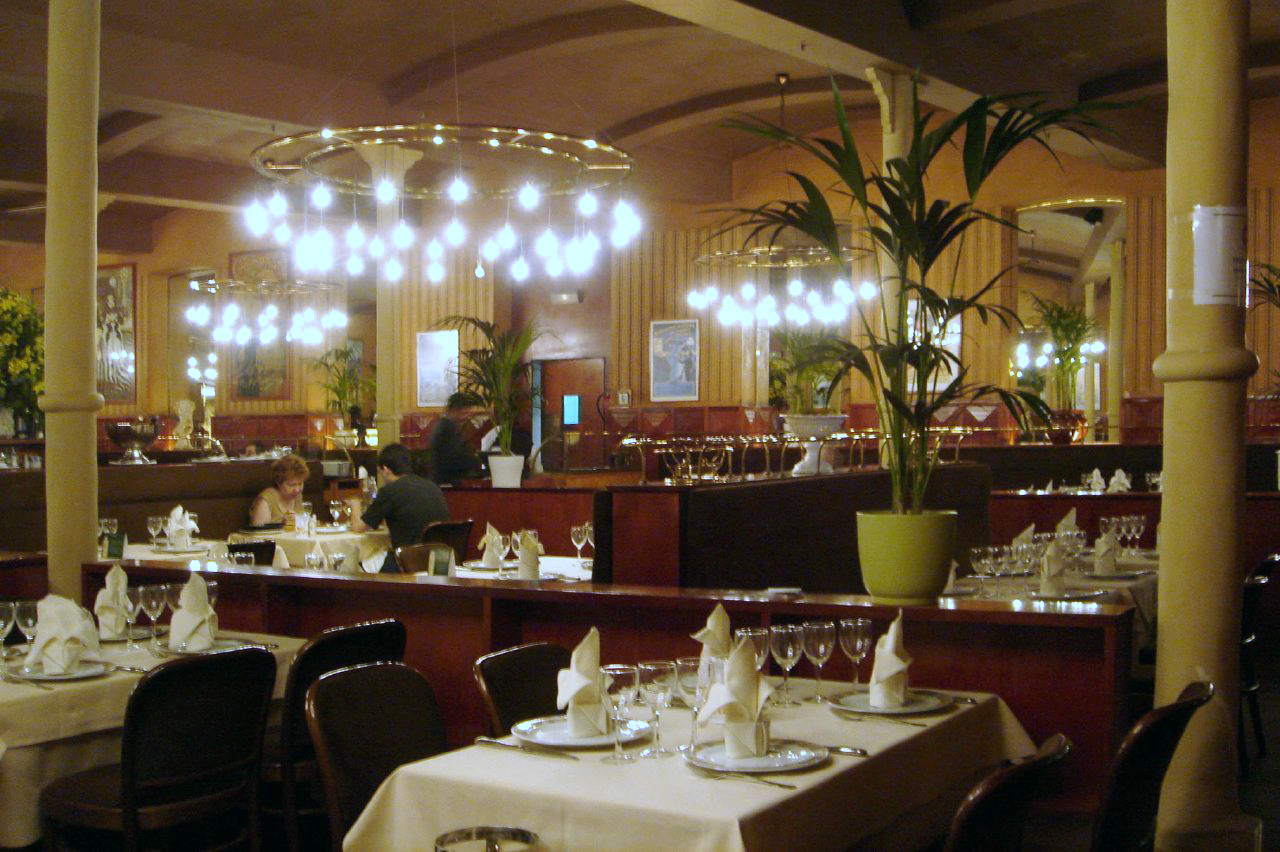
My region of the NJ Association of Women Business Owners had a dinner program booked at this restaurant for a Wednesday evening. The reservation was made a couple of months ago. A few days prior to the event, I called the owner's cell phone (she had given a couple of us that number) to give her a head count and to confirm. It went directly to voice mail, which was full and not accepting any messages.
Being a person of the modern age I decided to check the website for the restaurant's phone number. The website was gone, poof, down, not found, 86'd (to use a restaurant term). Curiouser and curiouser, as Alice in Wonderland would muse. I called information for the phone number and dialed; no answer. By then I was assuming something bad was going down.
I did a bit more online digging and came upon the restaurant's Yelp page. The header proclaimed that several Yelpers reported the location was closed. Suspicion confirmed.
It was further confirmed when I went to the restaurant's Facebook page and saw it had not been updated for over a year. What would you think?
Another NJAWBO member also tried calling the two phone numbers and also got no answer. I shared my digital detective work with her and we agreed it was unfortunate that the restaurant had closed, and that we were not told. We canceled the meeting. I decided the next day to call the restaurant again because it seemed so weird and guess what? An employee answered and said the owner would be back in about an hour. What?! Further confusion prevailed.
Imagine our surprise when the owner called my friend a little while later to get the details for our dinner! Huh?!
I eventually spoke with the owner and explained to her that after a full day (or more) of not getting any answers, of a voice mailbox that was not accepting messages, an absent website and a Yelp obituary (not to mention the abandoned Facebook page) that we thought the restaurant was closed. It is not. The owner explained that it had been closed for a couple of days for renovations but not permanently closed. She did have some lame excuse about not answering the phone because of the construction (I didn't get that connection).When I told her about the absent website she said something about it being updated. I explained to her that you don't take down a perfectly serviceable website just because you are updating your menu! Wait until you have the new site ready before you take down the existing one.
She had no clue about the Yelp post -- nor about the super-negative reviews that are posted there. So on top of the poor decision to take down the website prematurely, she was not monitoring what customers have been saying about her restaurant and there were definitely some comments that could have used some crisis communications responses.
When the issue of the Facebook page came up, she told me the prior owner's daughter had put up the page and would not make her an admin on the page, so it was in a state of suspended animation. She can't even take it down. I don't know why someone would abandon a page and then not give the new owner the permissions necessary to manage it (although I doubt there would have been much in the way of management there). But this was another nail in the reputation coffin.
She did assure me they are working on new menu items, they are open for business, and encouraged me to come by soon to check out the new dishes. I felt like telling her she needs me to check out her online reputation and help her clean that up!
What went wrong:
- The public had misinformation about the restaurant's status due to errors of omission (no signage or outgoing voice mail message stating the reason for the temporary closure). Some simple old-school communication tactics would have served the place well. A sign in the window and an outgoing telephone message explaining "we're closed for several days for renovations" would have saved them our business and would have avoided totally incorrect information on Yelp. That Yelp obit is now gone.
- The website person took down the existing website for no good reason, feeding speculation about the restaurant's closure when coupled with the "no one's home to answer the phone" situation. As noted above, don't take down the old website before launching the new one. If you do, put up a simple "new site under construction" page for the time being so people don't make wrong assumptions. By the way, there is now a non-functioning Wordpress site up in its place with some pretty pictures, no information or copy, and lots of contact boxes.
- The owner had no idea there was any conversation on social media about the restaurant and therefore was not responding to negative comments/reviews or correcting the misinformation out there about its demise. If you own a business, check the search engines for your name and see what's going on out in the cyber wilderness before reputation disaster strikes.
- No one had been attending to the Facebook page for so long, it gave the appearance of being abandoned (the page and the location). Either keep the pages updated or take them down; otherwise it gives the impression that no one's home. Their page is still abandoned. By the way -- please make sure you engage with your audience on your social pages. If people are allowed to comment there and they post something that warrants your attention, talk to them. Social dialogue is a great way to build audience and enhance your digital cred.
Friday, November 16, 2012
New (or Not-So-New) Media as the New Newsroom
Hurricane Sandy turned the social networks into virtual, 24-hour, non-stop newsrooms for many people. Whether or not you had power, whether you checked your pages on a desktop or mobile devices, it seemed everyone everywhere in affected areas (and beyond) were communicating, updating, and commiserating on the social networks.
I will freely admit that although my home was unaffected by the weather, I became utterly obsessed with checking in with followers, friends, and fans on Facebook, which became the visual ground zero for me for all things Sandy. I shared and soaked up countless compelling, frightening, and sad images posted by everyday people, news organizations, and bloggers. I posted updates, news, announcements on my wall for people to see. I got hooked on a newfound page, Tri-State Weather, where a lot of my weather-related posts came from. From the devastation on the Jersey Shore to the decimation on Staten Island, Queens, and other areas of New York, I and so many others came together in a newly formed online community that rallied 'round the storm victims (human and animal) to create a new kind of news organization.
Many people took to tweeting constant updates using various storm-related hash tags and I did follow the headlines there, and shared some updates throughout that first week. But for me, the double-whammy of existing relationships and all those photos and videos on Facebook truly became the newsroom of the moment. One friend created a new group page devoted solely to post-hurricane news: a place where people can share volunteer meetups, donation drives, tips on how to get to badly hit neighborhoods to deliver goods, who needs what and where and when. I was thoroughly gripped by this, actually unable to focus on my work that week as I was driven to be part of the breaking news.
I believe that this large-scale disaster has ramped up social media's place in news reporting . . . not journalism per se, as I am not stating that good, authentic, in-depth news reportage has been replaced. But it certainly was pushed aside a bit to make room for all the ordinary and extraordinary people who were reporting from the field in a way not seen before. We have all grown accustomed to local newscasts running video that was sent in by viewers, and I've noticed Twitter handles and hash tags in bugs on the screen during news programs more and more.
Ted Turner's visionary idea decades ago for a real-time, worldwide, 24-hour news station has given birth to a whole different way to do breaking news on social networks. I would never have thought, as a young copywriter working on the launch of CNN in the early 1980s, that I would be part of the news cycle in some small way during a natural disaster years later. The experience was absorbing on a level I could not have foreseen and I was gratified to hear that people who were following me were getting useful information. Now that the initial wave of Sandy has passed and the long, hard work of reconstruction begins, I hope I don't ever have the "opportunity" to feel compelled again to become a citizen journalist in times of struggle and darkness. I'd much rather stick to informational posts, newsy tidbits about advertising, marketing, or public relations, and promotions for my clients on my Facebook business page, my LinkedIn profile, or on Twitter or Google+.
Tuesday, August 28, 2012
When Good People (?) Say Bad Things Online
I have witnessed some serious downward spirals in interpersonal communication on social networks and it's quite disturbing.
And many of these are from so-called communications professionals, copywriters, and marketing experts.
I'm not talking about the lewd, crude comments the general public posts to YouTube videos and other shared media. Those are for another conversation. I'm talking about the way professionals snipe at each other on LinkedIn or bash each other on Facebook fan pages. Perhaps because there is room for more characters on these networks, people feel the need to show the darker side of their own character.
In short, their shit comes out all over the place and it's really ugly.
Do they really want to be known or remembered in this way? Uh, I guess so, because they can't seem to stop. As someone who writes for a living, and helps businesses and entrepreneurs spit-shine their image and their marketing message to the best of my abilities, this trend horrifies me!
I have seen this ugly devolution several times on LinkedIn when someone has posted that he/she is looking for a copywriter or art director. People respond with their contact information because they're looking for work. OK. But God forbid the seeker of professionals does not post an update publicly right away, or respond to each and every respondent--people immediately go on the attack and start saying some very ugly things about other professionals they don't even know! Then they start feeding on each other's posts until the conversation gets downright wicked. And they wonder why they are still looking for work?
How about when someone posts a question or opinion to a group and members actually mock them "in public" through their responses? Really? Did you not get the memo that social networks are for sharing ideas, resources, and opinions that will make a positive difference for others? Can't you take your nasty, petty, childish screeds offline and spare the rest of us innocent bystanders who must now delete these so-called discussions?
What you write on social media is forever, you can't really take it away, and your online reputation is how many of your friends, fans, group members, and followers will remember you.
A Sad Example
Last spring a marketing manager posted a simple call for freelance copywriters in one of my LinkedIn groups. People responded. A lot. I chose to respond to her post privately as I often do. It's an easy option and keeps you out of the comments fray.
Some group members checked out this person's profile (which is not related directly to her current position). These group members made an assumption about her present job and her needs, and those whose work history aligned with that background gave some more targeted responses. OK, so far, so good and on point. Until they encountered the response vacuum and did not hear back from this person about their sterling credentials.
Other group members started to get antsy when a couple of weeks went by and there was no further communication from the marketing person who needed to hire a freelance copywriter. The mob started to gather its verbal pitchforks and rakes and really went to town, bashing this person publicly--on LinkedIn, among each other--for not responding to them in what they deemed to be a fair amount of time. Yes, these copywriters publicly demeaned her and anyone who would dare to post a possible job opening. Accusations of phishing abounded!
I sat on the sidelines in horror as I watched fellow group members devolve into a mob mentality of permanent, negative, self-defeating written communication. I also followed up privately and politely to the woman to see if she'd made any decisions yet. I also gave her a heads up on the ugly slander-fest going on in the LinkedIn group at her expense.
She posted a polite update to everyone assuring them she received everyone's contact information and was holding on to it for any future needs.
Oh - and I got the assignment.
Subscribe to:
Posts (Atom)