Showing posts with label tv spots. Show all posts

Sunday, September 1, 2013

Missing the Old Days

Summer is winding down, my daughter (only child) is now at college, and I find myself feeling quite nostalgic for my college days. I did not even love where I went to college but no matter . . . knowing about all the experiences my daughter will be experiencing over the next four years makes me yearn for that simpler time (that, at the time, did not always feel so simple!).

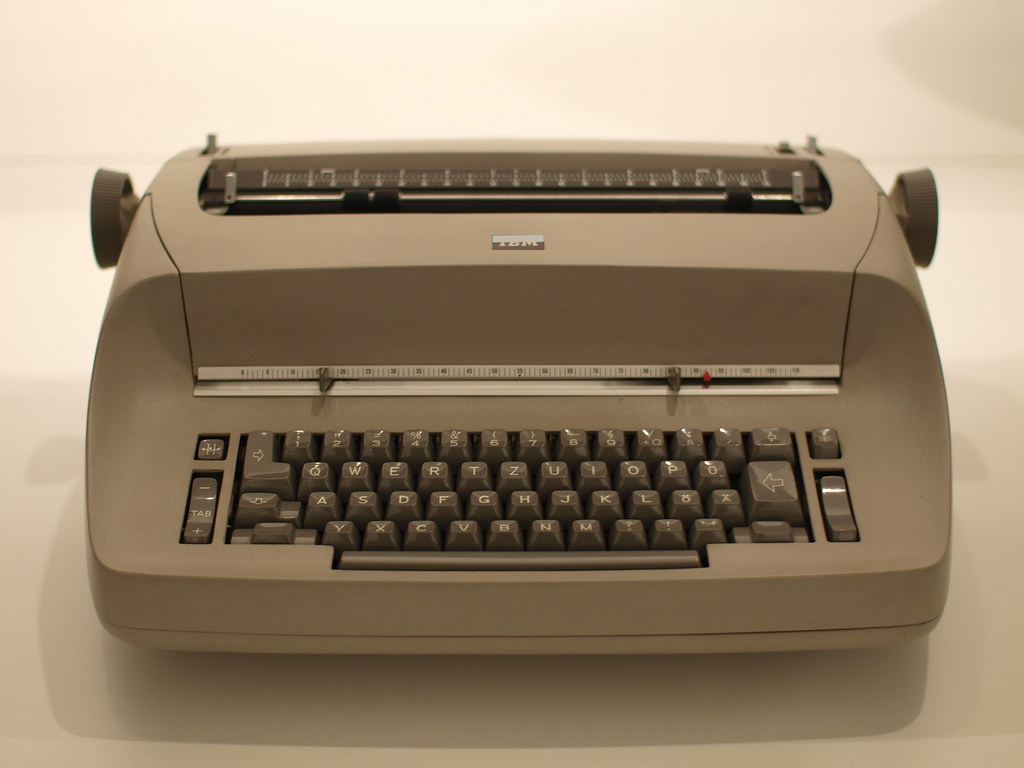
Then my thoughts turn to my early days in advertising, as an aspiring and then junior copywriter. Ah . . . typing on an IBM Selectric II; brainstorming with my art director in our offices, cracking each other up with awful headlines and ad concepts until we got a few we liked, then layouts drawn with black marker on big pads of paper; art directors with heads buried in lucigraphs as they resized images, and waiting three days to get a proof back because it had to be typeset and the PMT (photo mechanical transfer) had to be created (remember veloxes?). Graphic artists knew how to paste up type and the typesetting machine we got at McDonald & Little took up the whole break room!

Video and audio tape. 7-1/2 ips. 3/4", 1" or 2" for broadcast -- all these numbers meant something at one point. You could hold your work in your hands. You schlepped a portfolio around with your print work and your reels.

Today it is quite different in so many ways, from the way we work to how the work is produced. Now we talk about MP3s and podcasts, and send links to websites written or digital portfolios. Spots are edited on desktops, ad layouts are done in minutes, changes nearly instantaneous. My skills have expanded and my work assignments broadened to meet the demands of today's clients and technology.

But the work is different for me in other ways as a freelance copywriter. I'm a journeyman, I go where I'm needed and generally work on my own, separately from the art director or designer until we meet up later on to align our designs, copy, or concepts. It's a backwards process but seems to be the way these days. Sometimes we end up at the starting line together -- a more cohesive way to produce good creative. But not always. And I don't always see the final version of work I've done--assignments often disappear into the vapor or I forget to ask because I'm on to the next project.

As nostalgia for the "good old days" seeps into my consciousness, I miss:
  •  Sitting in each other's offices with pads and pens and ideas bouncing around the room. 
  • Working very late and sleeping on my creative director's couch because the meeting was early the next morning. 
  • The sound of the keyboards in writers' offices.
  • The presentation meetings with our group head and creative director, getting them to sign off on our ideas to present to the client. 
  • Working with great voice talent to create radio spots or going on shoots for TV commercials.
  •  Storyboards for commercials rendered rough in the office, then returned with the artistic flourishes of the storyboard artist. 
  • Acting out radio scripts for other creatives before sharing with the client. 
  • And humoring the account guys who wanted creative to follow "the research" (nice try, guys). 
Good times.


My former group head sent me a slide last year of me and a Charlie Chaplin impersonator from a shoot we did for a bank commercial a million years ago. Two framed animation cels (hand-drawn and hand-painted) from a Cookie Crisp commercial I wrote still adorn the wall above my office. Treasured memories.


Ad agencies were not public relations agencies and the lines had not yet blurred as they are today between advertising, marketing, and PR. There was no internet yet nor social networks. The day I was leaving my job at McCaffrey & McCall, some new "computerized typewriters" were being delivered to the secretaries--the first personal computers the agency was investing in. Exotic.

The unfettered creativity, the mistakes, the bloopers, the great lines and sizzling copy (the ones that the clients didn't buy and the ones they did), the jingles, the learning curve, and the feeling that all was right with the world. That was then, this is now--byline articles and blog posts, website copy, press releases, collateral material, and yes, even the occasional ad or TV or radio spot. And I'm so happy to be a part of it still! 

Tuesday, July 10, 2012

Say It, Don't Spray It!

Why is it that so many advertisers feel the need to cram every single message they have into one ad? I'm sure someone told these businesses that with their limited advertising dollars, it's best to use the shotgun approach, put all their selling points out there, and see what people respond to.

Uh, not a great idea. Really, I would not give you a bum steer here. Keep your ad copy simple. If you cannot afford to run more than one ad for something, resist the temptation to squish every sales point into the piece. Save it for your website where you can break down your message into distinct pages.

These best approach is to really hone your message, cough up the money to run enough ad insertions or radio or TV spots to drive home what you are trying to say. You can say it in many different ways - that's the beauty of an ad campaign. But you simply cannot sell your audience on more than a point or two within one piece of (well-written) communication. No one will know what you are really trying to say if you spray them with too many messages. Especially in this age of over-communication, media barrages, too many emails, etc., now more than ever, simplicity is golden.

In a print ad, the headline and leave-behind line, coupled with a strong visual, are what will grab readers' attention. These need to be short and to the point and speak to your readers' needs or, as some marketers put it, their pain points (in other words, how are you solving their problem). If you are a financial services firm that specializes in a niche investment product, and cater to a certain segment of the investing population, you have to distill your message to the one thing these potential clients need to know; don't waste their time with lots of ancillary information that has nothing to do with "here is this great product you need to know about ... and here's why." The ad copy can provide more detail but the headline and leave-behind line really need to sum up why the audience needs to contact you for more information or to open an account.

The challenge is greater in radio, where people are not leisurely reading, stopping to rip out an ad or jot down a phone number. They are driving, or listening while working, and might not have the chance to stop everything to fully grasp your vital statistics. As "the theater of the mind," radio spots must paint a clear picture of what you are selling in a very different way. The spots must be uncluttered in order to grab attention, maintain attention, and eventually lead to the desired result. Screaming announcers, too many sound effects, boring announcer reads, too much rambling copy ... these all invite tuning out, not tuning in. Keep the message simple and clear, make it fun if that's appropriate, and give a clear call to action. As with any kind of media buy, the spots need to not only be well written but also be well placed (buy the right programs, time slots, frequency) to make an impact.

It's not always easy to key in on just one message but if you think about the ad campaigns that are not only memorable but also effective, you'll find a common element among them: one clear message conveyed in different ways, across different media perhaps or over the course of many years. You can only effectively sell one quality at a time through your advertising copy: quality, social responsibility, saves money, saves time, builds wealth, nurtures problem students, pamper yourself or others, feeds the soul/spirit/belly, adventure, fun, family (and on and on).  Working with a professional copywriter or a marketing expert can help you figure out what you need to communicate and help you avoid spraying your target audience with too much extraneous information.


Friday, May 25, 2012

What the Heck is a Copywriter Anyway?

A blog post by a fellow copywriter from the U.K. inspired me to write this entry today. The questions of "What do you do?" or "What is a copywriter?" are not unusual.

First of all, I am not a lawyer who works with copyrights. Copywriters work with copy--with text that promotes and sells in some fashion. They come up with concepts to convey the sales message, in tandem with the art director who conceives the visuals that complete the website, TV commercials, or print project. Then they write the words that speak to that concept. It used to be that the term "copywriter" implied "advertising" but this is not always the case anymore (although I got my start in ad agencies).

So what does a copywriter do? As a freelance copywriter I write: tag lines, print ads, headlines, and online banner ads; in-store signage, table tents, and other point-of-sale materials; other people's blog posts, websites, white papers, and articles--and more. (I am standing by for TV and radio spots.) If the medium has words that sell, promote, educate, or inform, it requires a copywriter to put virtual pen to paper (and sometimes a real one to get the creative juices flowing). Sometimes I get to brainstorm the concepts with an art director or hash out layout ideas with a graphic designer (like the old days) but often I work solo, writing to a website design or creating headlines that will inform the layout. I work with a rich assortment of accounts and the people behind them, and flex my writing muscles as the brand voice behind these accounts.

I had a wonderful career in ad agencies, first in Atlanta (long ago and far away, before there were word processors and the World Wide Web, and cable TV was an emerging media outlet) and then in New York. I had the opportunity to flourish creatively writing print ads, radio and TV spots, concept ads for consumer package goods, and print collateral. I got to work on a broad array of accounts. It was a blast. I still have two hand-rendered animation cels from a children's cereal commercial I wrote hanging over my desk.  

I still write the words that inform, promote, and ultimately, sell products and services. But in today's incredibly diverse communications landscape, copywriters must be more versatile to meet the demands of the marketing domain . . . and many small businesses are not putting their money behind paid advertising in the historic sense. Today it's about being able to cross over into other marketing arenas such as public relations or corporate communications. Whichever route clients take to market their messages, copywriters will be there to guide them.